Tuvan
FC–LIV–0013 · 51.7° N, 94.0° E

Tuvan

People Who Sing the Steppe
Verified with khöömei masters and herding communities around Kyzyl & Aldyn-Bulak

The Tuvans are a Turkic people of the south-Siberian steppe and taiga, herders of horse, sheep, yak and reindeer at the very centre of Asia, where the Yenisei is born. Their gift to the world is khöömei — throat-singing, in which a single voice splits into two or more notes at once, drawing a deep drone beneath a whistling overtone melody that imitates wind over grass, water over stone and the call of an animal. The igil and doshpuluur carry the same sound on horsehair strings. Their world is held between Tengrism and shamanism, the spirit of every spring and mountain, and a deep-rooted Tibetan Buddhism. FirstCiv holds their living recordings as community-owned Heritage Tablets.

241
Tablets minted
38
Field contributors
22,600
$LORE to community
5
Khöömei styles held
Tuvan
Photographs & media: Wikimedia Commons (CC0 / CC BY / CC BY-SA)
People
~280,000
Homeland
Tuva (Tyva) · south Siberia · centre of Asia
Language family
Siberian Turkic (Tyva dyl)
Belief
Tengrism & shamanism · Tibetan Buddhism
Livelihood
Herding horse · sheep · yak · reindeer
Signature art
Khöömei overtone throat-singing

At the centre of Asia

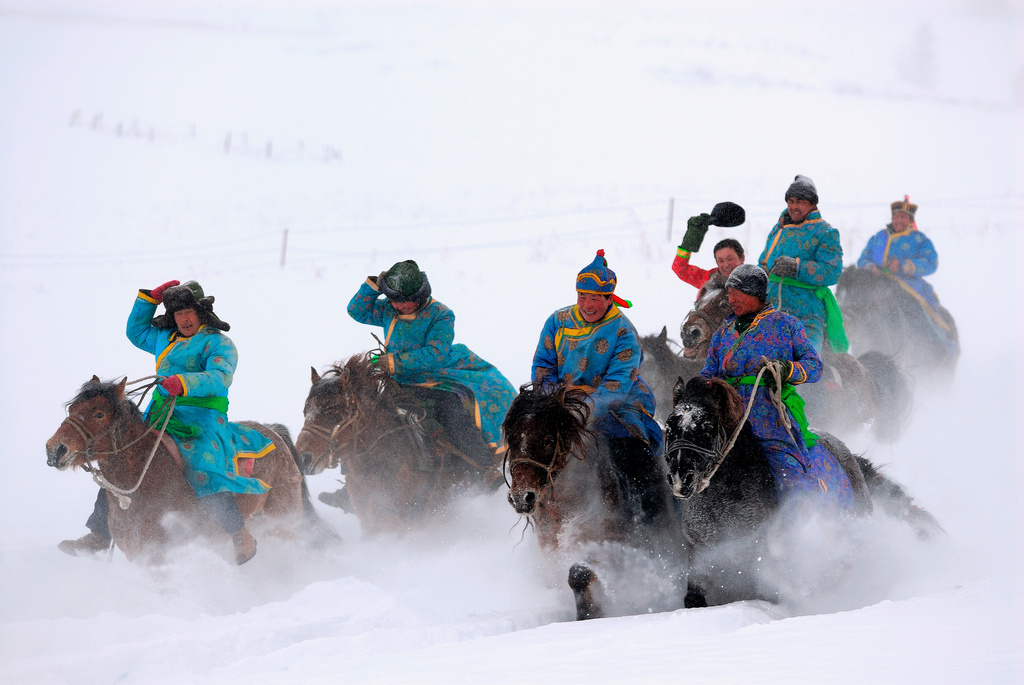
Tuva sits at the geographic heart of the Asian continent, a bowl of steppe and taiga ringed by the Sayan and Tannu-Ola mountains where the two source rivers of the Yenisei meet at Kyzyl. For three thousand years it has been a crossroads of the nomadic world — Scythians left gold in its kurgan burial mounds, Turkic and Uyghur khaganates rose and fell here, and the people who remain are herders who follow horse, sheep, yak and, in the northern forest, the reindeer across a calendar of seasons.

At the centre of Asia

Two notes from one throat

Khöömei — Tuvan throat-singing — is the art of producing two or more pitches at once: a low, steady drone and, riding above it, a whistling overtone melody shaped by the lips, tongue and throat. Its styles imitate the living soundscape of the steppe — sygyt the high wind and birdsong, kargyraa the rumble of camel and river, borbangnadyr the rolling of water. It is not performance bolted onto life but a way of speaking with the land itself, carried on the horsehair igil and doshpuluur.

Two notes from one throat

A century of upheaval — and a living present

In 1921 Tuva became Tannu-Tuva, a nominally independent republic, before being absorbed by the Soviet Union in 1944 — a change that brought a new alphabet, collectivised the herds and pressed hard on both shamanism and Buddhism. Both have since returned in the open: shamans practise again in Kyzyl, monasteries are rebuilt, and khöömei, once a regional curiosity, has carried Tuvan singers like the group Huun-Huur-Tu and the late Kongar-ool Ondar onto stages across the world.

A century of upheaval — and a living present
Ways of life

What is kept alive

Khöömei

Khöömei

Throat-singing

A single voice split into a drone and a whistling overtone — sygyt, kargyraa and more, each echoing wind, river or beast.

Igil & doshpuluur

Igil & doshpuluur

Horsehair strings

The bowed horsehead igil and the plucked doshpuluur, voicing the same overtones as the singing voice.

Herding & the ög

Herding & the ög

Nomadic life

Following horse, sheep, yak and reindeer across the steppe and taiga, and the felt ög (yurt) that moves with the herd.

Shamanism

Shamanism

Kham & düngür

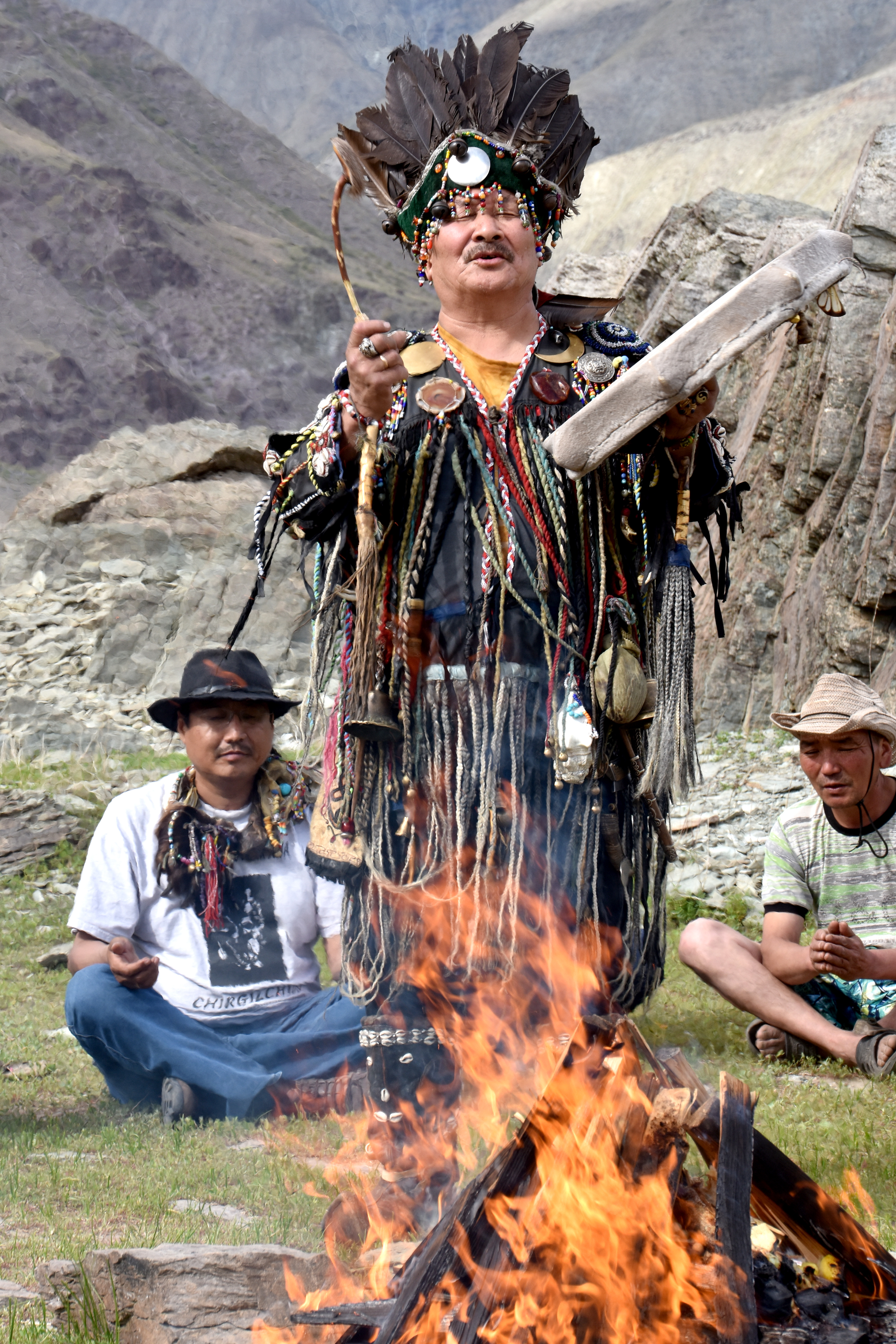
The shaman's drum and the kamlanie rite, calling on the masters of spring, mountain and fire to keep the balance.

Stone carving

Stone carving

Chonar-dash

Soft agalmatolite cut into horses, lions and dragons — the carving tradition of the village of Kyzyl-Dag.

Naadym & horse

Naadym & horse

Festival & race

The summer Naadym festival of wrestling, archery and the long horse-race that the whole steppe rides to.

Through deep time

A long thread

c. 700 BCE
Scythian herders raise gold-filled kurgan mounds (Arzhan)
c. 740 CE
Uyghur Khaganate builds fortresses on the Tuvan steppe
1757
Tuva falls under the Manchu Qing as outer Mongolia's edge
1921
Tannu-Tuva proclaimed an independent people's republic
1930
Tuvan first written — a Latin alphabet, then Cyrillic in 1943
1944
Tuva absorbed into the Soviet Union
1990s
Shamanism & Buddhism revive; khöömei reaches world stages
2025
Live, consented field recordings on FirstCiv
Belief & story

Tengri, the masters of place, and the singing land

Above is Tengri, the eternal blue sky; below, the earth and the water each have their iye — their master-spirit — at every spring, pass and mountain. Nothing of the land is taken without acknowledgement: ribbons of chalama are tied at the ovaa, the stone cairn on the high pass, and milk or tea is flicked to the four directions before a journey. The kham, the shaman, travels in trance with the beat of the düngür drum to treat with these spirits, while in the monasteries the lamas of Tibetan Buddhism turn the wheel of prayer. Khöömei belongs to this same world — to sing the wind and the river in their own voice is itself a way of honouring the masters who dwell in them.

Voices

Hear it for yourself

Sygyt — the whistle over the drone
▶ Audio · 2:54
VERIFIED

Sygyt — the whistle over the drone

by @kyzyl.khoomei · Kyzyl#0241
Igil — the horsehead fiddle
Song · 5:10
VERIFIED

Igil — the horsehead fiddle

by @igil.maker · Aldyn-Bulak#0226
The shaman's drum & the spirits of place
Story · audio · 9:30
VERIFIED

The shaman's drum & the spirits of place

by @kham.tos · Kyzyl#0208
Woven into the world

Threads across the graph

Mongolian

Steppe neighbours and kin whose long-song and khöömii overtone singing share Tuva's bond of voice to horizon.

Visit

Sámi

Reindeer-herders of another north whose joik, like khöömei, sings the land itself rather than about it.

Visit

Inuit

Throat-singing kin across the circumpolar world, voicing breath and place between two singers.

Visit
Questions

Common questions

Who are the Tuvans?

The Tuvans (Tyva) are a Turkic people of south Siberia, at the geographic centre of Asia, where the two source rivers of the Yenisei meet. Numbering around 280,000, they are herders of horse, sheep, yak and reindeer, and are best known worldwide for khöömei — overtone throat-singing.

What is khöömei throat-singing?

Khöömei is the Tuvan art of producing two or more pitches from one voice at the same time — a low fundamental drone with a whistling overtone melody shaped above it. Its named styles, including sygyt (a high whistle) and kargyraa (a deep growl), imitate the wind, water, birds and animals of the steppe.

Where do the Tuvans live?

Most live in the Republic of Tuva (Tyva) in the Russian Federation, a region of steppe and taiga ringed by the Sayan and Tannu-Ola mountains on the Mongolian border, with the capital at Kyzyl. Smaller communities live across the frontier in Mongolia and China.

What do Tuvans believe?

Tuvan spiritual life blends Tengrism and shamanism — the veneration of the eternal sky and the master-spirits of springs, passes and mountains, honoured at ovaa cairns — with Tibetan Buddhism, whose monasteries and lamas were revived after the Soviet period.

How can I help preserve Tuvan heritage?

Support Tuvan musicians and khöömei masters directly, learn a few words of the Tuvan language, and back community-led recording. On FirstCiv every recording is logged with the singer's consent and minted as a Heritage Tablet owned by the Tuvan community, so royalties flow back to the keepers of the tradition.

Owned by its keepers

Every recording here is held with community consent. The Tuvan are named as origin and primary beneficiary; royalties flow to the community fund. Photographs & media: Wikimedia Commons (CC0 / CC BY / CC BY-SA).

Reference edition — built from openly-licensed sources with verified attribution. Not community-endorsed. Communities are invited to claim and govern this page.