Among the oldest lineages of humankind
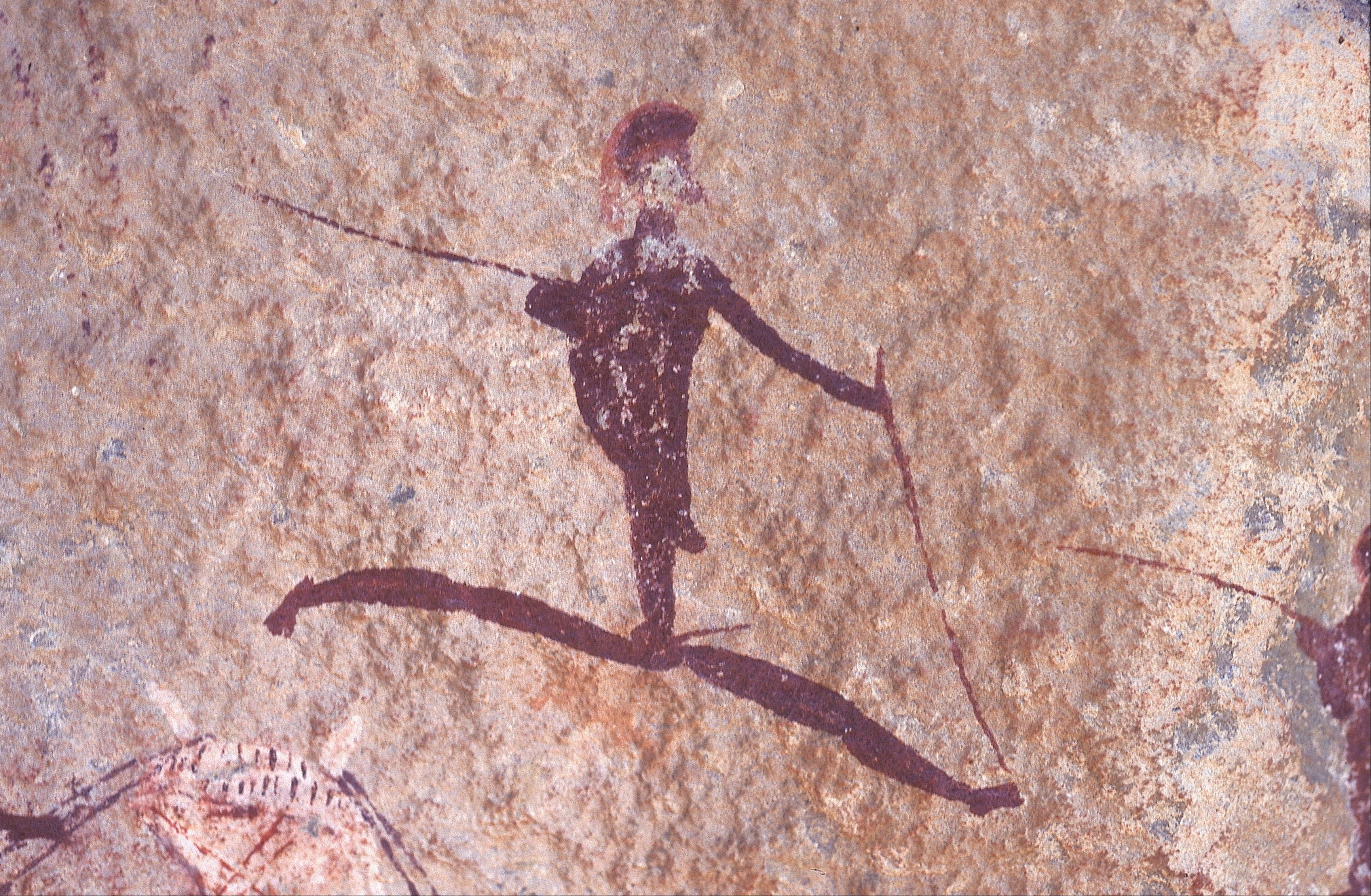
The San carry some of the deepest roots in the human family tree. Genetic studies place their ancestral lineages among the oldest of any living people, branching near the base of modern humanity's descent in Africa — a presence in southern Africa reaching back tens of thousands of years, and a continuity of hunting, gathering and painting that long predates farming, herding or the city anywhere on Earth. They are not a relic of the past but living people; what is ancient is the unbroken thread, not the San themselves.
.jpg)
Reading a desert most would die in
San life was built on an intimate knowledge of the Kalahari and an ethic of sharing in which no one owned more than they could carry and a hunter's kill belonged to the band. Men tracked game for days behind a slow poison drawn from beetle larvae; women gathered the greater part of the food — roots, nuts, the water-bearing tsamma melon — and read the land for the buried tubers and sip-wells that hold water through a rainless season. Knowledge of animal, plant and weather was the most precious inheritance of all.

Dispossession, and endurance
Colonial settlers and later governments took the San's land, hunted their ancestors as vermin, and pushed survivors onto farms, into reserves or off their Country altogether — in Botswana, San were moved out of the Central Kalahari Game Reserve in disputes that reached the courts. Languages fell silent; the southern ǀXam, whose words filled the great folklore archive, no longer have first-language speakers. Yet the San endure: the ǂKhomani won back land in South Africa, community trusts steward the rock-art and the languages, and the dance is still danced.
_Starting_Fire.jpg)
What is kept alive


.jpg)


A long thread
Hear it for yourself

Threads across the graph
Aboriginal Australians
Fellow First Peoples and ancient rock-painters whose Songlines, like the San's tracking and story, hold a whole country in voice and image.
Maasai
East African neighbours whose life is keyed to the herd and the land, and whose song and dance carry the law of the community.
Zulu
Southern African neighbours whose isiZulu carries click consonants borrowed from Khoisan speech — a living echo of centuries of contact with the San's world.
Common questions
Who are the San people?
The San are the first people of southern Africa — hunter-gatherers of the Kalahari and surrounding lands in Botswana, Namibia, South Africa and Angola. They carry some of the oldest genetic lineages of humankind, and are also known by the names Bushmen, Basarwa and ǃKung, though many communities prefer to be called by their own language group, such as Juǀʼhoansi or Naro.
What are the San click languages?
The San speak languages from the Khoe and Tuu families that use click consonants — sounds made by drawing air against the teeth, palate or side of the mouth, written with the symbols ǀ ǁ ǂ ǃ. ǃXóõ may have more distinct speech sounds than any other language on Earth. Several San languages have already fallen silent and most of the rest are severely endangered.
What is the San healing or trance dance?
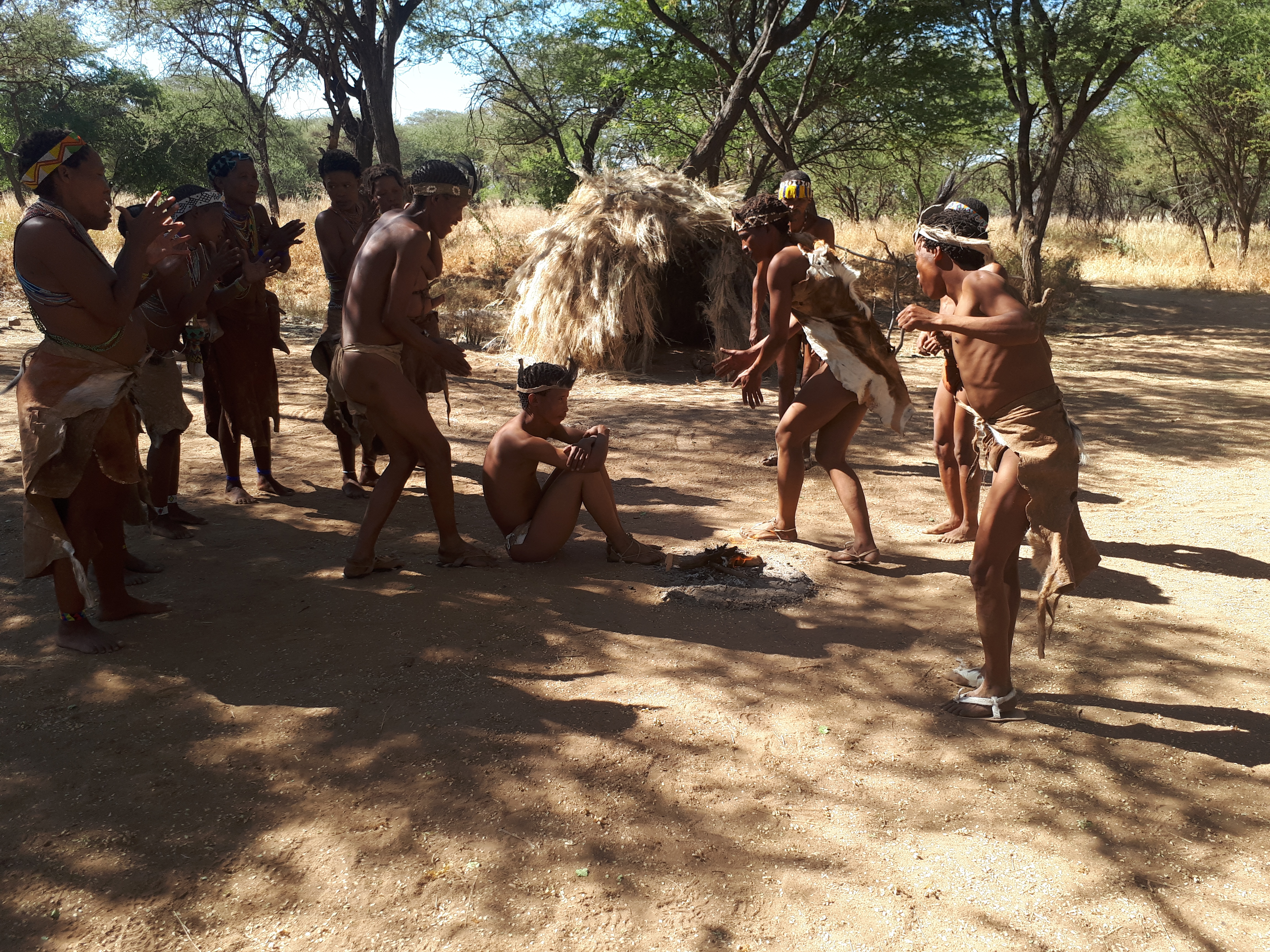
The healing dance is the central ritual of San life and one of the oldest rituals still in living use. Women clap and sing through the night while the men dance until the supernatural healing energy, nǀom, rises in a healer and carries them into trance, in which they draw sickness from the community. Its deepest inward meaning is held by the San themselves and is not put on public display.
Where do the San live today?
The San live across the Kalahari and southern Africa — chiefly in Botswana, Namibia and South Africa, with smaller numbers in Angola and Zambia. Many no longer live as full-time hunter-gatherers, having been moved off their ancestral land onto farms, settlements and reserves, but communities such as the Juǀʼhoansi of Nyae Nyae and the ǂKhomani of South Africa continue to steward their land, languages and traditions.
How can the San heritage be preserved and supported?
Recording elders' speech, songs and stories with their consent fixes endangered click languages before they fall silent, and supporting San-led community trusts, land claims and language schools keeps that knowledge in San hands. On FirstCiv every recording is shared only with the keeper's consent, ownership stays with the San community of origin, sacred material is never minted, and royalties flow back to community trusts.
The recordings on this page are openly-licensed reference material, credited to their sources. The San are named as origin; if this heritage is yours, you can claim this page, correct it, or ask for anything to be removed. Photographs & rock art: Wikimedia Commons (CC0 / CC BY / CC BY-SA / CC BY IGO).