
Down the Nile, to the Rift Valley
The Maasai trace their origins to the lower Nile valley, migrating south with their herds and reaching the Rift Valley grasslands by around the 15th to 17th centuries. By the 19th century their territory stretched across almost the whole of the central Rift, from northern Kenya deep into what is now Tanzania — a pastoral power whose moran were feared and whose laibon were sought for their counsel. They are an Eastern Nilotic people, kin in language to the Samburu and the Camus to their north.

The age-set and the moran
Maasai society is bound not by chiefs but by age. Boys pass together through initiation into a single named age-set that will move through life as one — first as moran, the warriors who once defended the herds and the borders, then, after the eunoto ceremony, into junior and senior elderhood, where authority and the right to speak in council are earned. A man's age-mates are his brothers for life. The system, not a king, holds the people together across a vast and scattered land.

A living culture under pressure
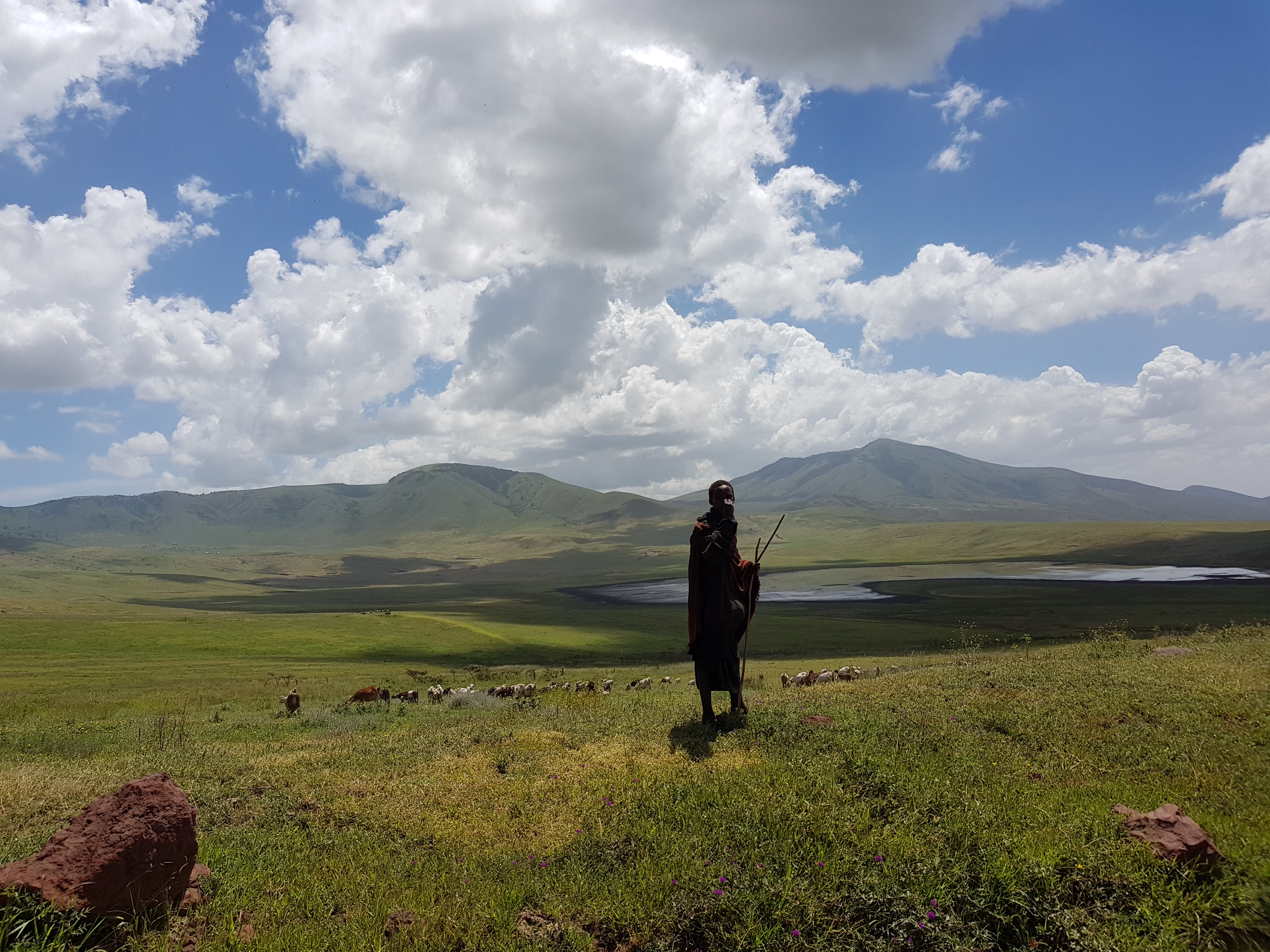
The colonial and modern eras pressed hard on the Maasai: treaties and parks took the best grazing land, drought and fenced borders cut the old migrations, and schooling drew the young toward the towns. Yet the culture holds firmly in the present — the shúkà and the beadwork are worn with pride, the adumu is danced at every celebration, and Maasai voices speak for land rights and for the herding life. The greatest threat now is to the open rangeland itself, squeezed by farms, fences and a changing climate.

What is kept alive



A long thread
Hear it for yourself

Threads across the graph
Māori
Fellow First Peoples whose identity, like the Maasai age-set, is held in genealogy and in the words spoken before one's own name.
Mongolian
Herders of a vast open land whose wealth, song and way of life all turn on the movement of the herd.
San
Neighbours in southern Africa whose deepest knowledge, like Maa, is carried in voice, dance and the memory of elders.
Common questions
Who are the Maasai?
The Maasai are a Nilotic pastoralist people of the Great Rift Valley, living across southern Kenya and northern Tanzania. Numbering around 1.5–2 million, they herd cattle, goats and sheep, and are known worldwide for the adumu jumping dance, their deep-red shúkà cloth and their intricate beadwork. Their society is organised by age-sets rather than chiefs.
What language do the Maasai speak?
The Maasai speak Maa (ɔl Maa), an Eastern Nilotic language related to the speech of the Samburu. Traditionally Maa was entirely oral; it is now also written in the Latin alphabet, with extra letters for its distinctive sounds, though the richest knowledge still lives in song, story and the memory of the elders. Many Maasai also speak Swahili and English.
What is the adumu, the Maasai jumping dance?
The adumu is a dance of the moran, the young warriors. They form a circle and chant a deep, rhythmic hum while, one at a time, a warrior springs straight up from the spot, keeping his back straight and his heels off the ground, leaping as high as he can. It is a display of strength and stamina, performed at celebrations and ceremonies.
What do the colours in Maasai beadwork mean?
Maasai beadwork is a language. Red stands for bravery and the blood of cattle, white for milk, peace and purity, blue for the sky and rain that bring grass, green for the land, and orange or yellow for hospitality. The patterns and colours of a collar or band can name a person's age, marital status and family.
How can the Maasai language and traditions be preserved?
Recording elders speaking Maa and performing songs, dances and beadwork — always with their consent — fixes pronunciation and meaning that schooling and town life are eroding. On FirstCiv, each recording is credited to its keeper and the community of origin, ownership stays with the Maasai, and any royalties flow back to a community fund supporting the people who keep the culture alive.
The recordings on this page are openly-licensed reference material, credited to their sources. The Maasai are named as origin; if this heritage is yours, you can claim this page, correct it, or ask for anything to be removed. Photographs & video: Wikimedia Commons (CC0 / CC BY / CC BY-SA).