
Across the Sahara, in chains
The Gnawa trace their roots to the sub-Saharan peoples — Bambara, Hausa, Fulani, Songhai and others — brought north into Morocco over centuries of the trans-Saharan slave trade, many through the great desert routes to the Saadian and Alaouite sultans. Uprooted from a dozen homelands and tongues, they forged from their suffering a single new identity bound not by blood but by a shared music, a shared faith and a shared night. The very word qraqeb, the iron castanets, is said to recall the irons they once wore.

The lila — a night that heals
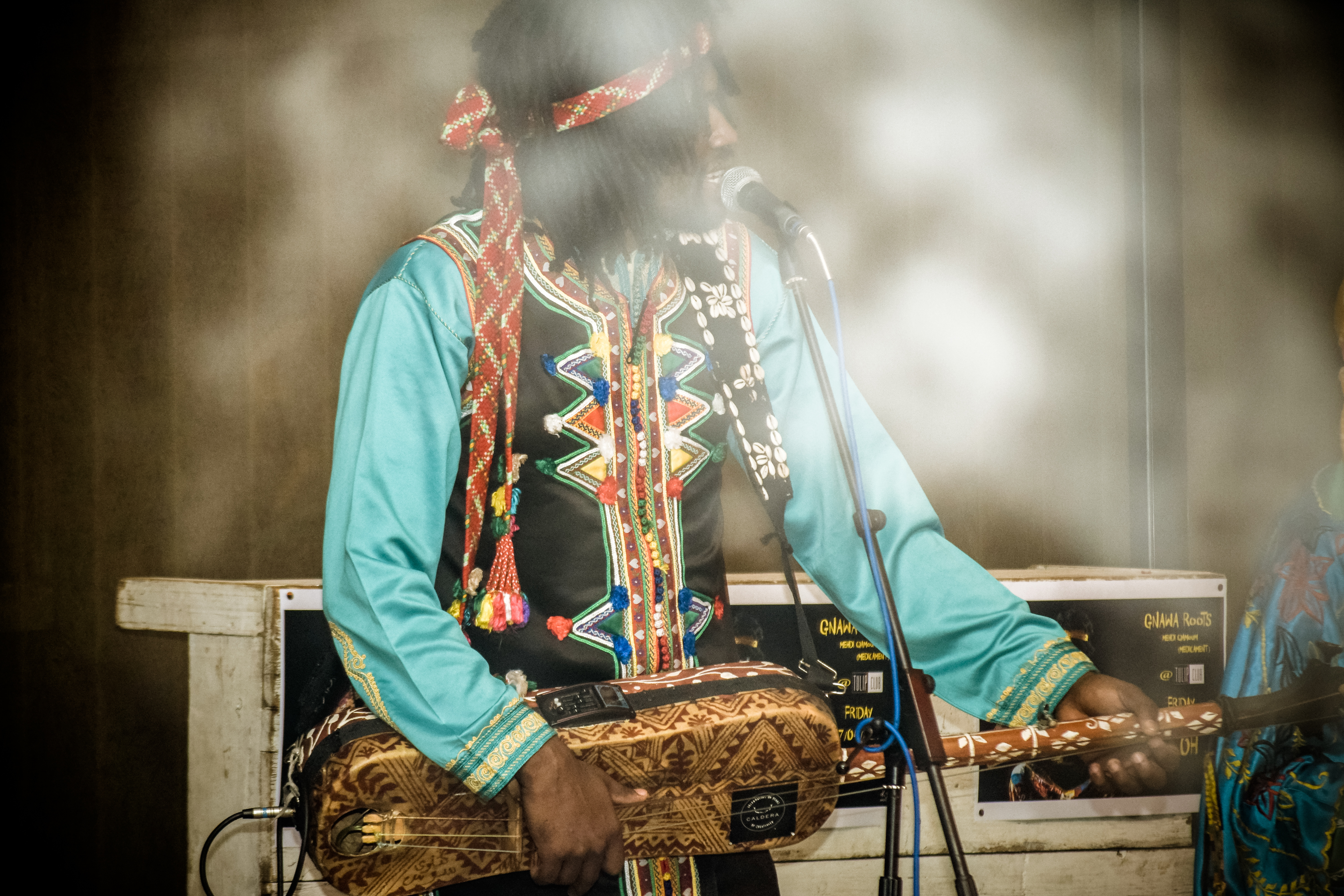
At the heart of Gnawa life is the lila or derdeba: an all-night ceremony of healing. Led by a maâlem on the guembri and carried by the qraqeb and chorus, the music moves through a fixed sequence of colours — each summoning a family of mluk, the spirits — while incense burns and the arifa guides those who fall into trance. To dance the jadba is to let the spirit ride the body until the affliction is danced out. It is at once a Sufi-flavoured devotion to the saints and a far older African rite of possession, fused into something wholly Moroccan.

From the brotherhood to the world stage
In the late 20th century Gnawa music broke out of the lila and onto the world's stages — drawing jazz, rock and Western musicians to Morocco, and giving rise in 1998 to the Gnaoua World Music Festival of Essaouira, now one of Africa's largest. In 2019 UNESCO inscribed Gnawa on its list of Intangible Cultural Heritage. The maâlems navigate a careful balance: sharing the music with the world while guarding the sacred night at its source — and passing the guembri, string by string, to a new generation.

What is kept alive



A long thread
Hear it for yourself

Threads across the graph
Tuareg
Saharan neighbours whose music and poetry, like Gnawa song, cross the desert that shaped both peoples.
San
Another African people whose healing comes through an all-night dance that carries the dancer into trance.
Maasai
East African pastoralists whose song and rhythmic dance, like the lila, bind a community in shared voice and motion.
Common questions
Who are the Gnawa?
The Gnawa are a Moroccan people and spiritual brotherhood descended from sub-Saharan Africans — Bambara, Hausa, Fulani and others — brought north across the Sahara during centuries of the slave trade. From that history they built a shared identity centred on healing music, Sufi-rooted Islam and the all-night lila ceremony. Their tradition is now found across Morocco and, in related forms, in Algeria and Tunisia.
What is a Gnawa lila?
The lila (or derdeba) is an all-night ceremony of healing led by a maâlem master-musician. Carried by the deep three-string guembri lute, iron qraqeb castanets and chorus, and guided by incense and an arifa, it moves through a fixed sequence of colours — each summoning a family of spirits, the mluk — until those who fall into trance dance their affliction into release. It is devotion, medicine and remembrance at once.
What instruments do the Gnawa play?
The lead instrument is the guembri (also called sintir or hajhouj), a three-string bass lute with gut strings over a camel-skin body, played by the maâlem. The relentless rhythm comes from the qraqeb — heavy iron castanets, two held in each hand — joined by drums and a call-and-response chorus. The Gnawa say the iron clatter of the qraqeb recalls the chains their ancestors once wore.
Where do the Gnawa live, and is the tradition still alive?
Gnawa communities and brotherhoods are found across Morocco, especially in Essaouira and Marrakech, with related traditions in Algeria and Tunisia. The tradition is very much alive: it was inscribed on UNESCO's list of Intangible Cultural Heritage in 2019, and the Gnaoua World Music Festival in Essaouira, held since 1998, draws huge international audiences each year.
How can I help preserve Gnawa heritage?
Support the maâlems and brotherhoods directly — attend their ceremonies and festivals on their terms, buy their recordings, and respect that the sacred core of the lila is not for sale or spectacle. On FirstCiv, recordings are shared only with the maâlems' consent and minted as Heritage Tablets that keep ownership and royalties with the brotherhood of origin, so the value of the music returns to the people who keep it alive.
The recordings on this page are openly-licensed reference material, credited to their sources. The Gnawa are named as origin; if this heritage is yours, you can claim this page, correct it, or ask for anything to be removed. Photographs: Wikimedia Commons (public domain / CC BY / CC BY-SA).