
The people of Ainu Mosir
Long before Hokkaidō bore that name, the northern islands were Ainu Mosir — the quiet land of human beings. The Ainu are widely linked to the ancient Jōmon, whose cord-marked pottery is among the oldest on Earth, and they emerged as a distinct culture through the Satsumon and Okhotsk periods of the first millennium. They lived not in one state but in many river-valley communities called kotan, fishing the salmon runs, hunting deer and bear in the mountains, and gathering the plants of the forest — reading the land and its seasons with great precision.
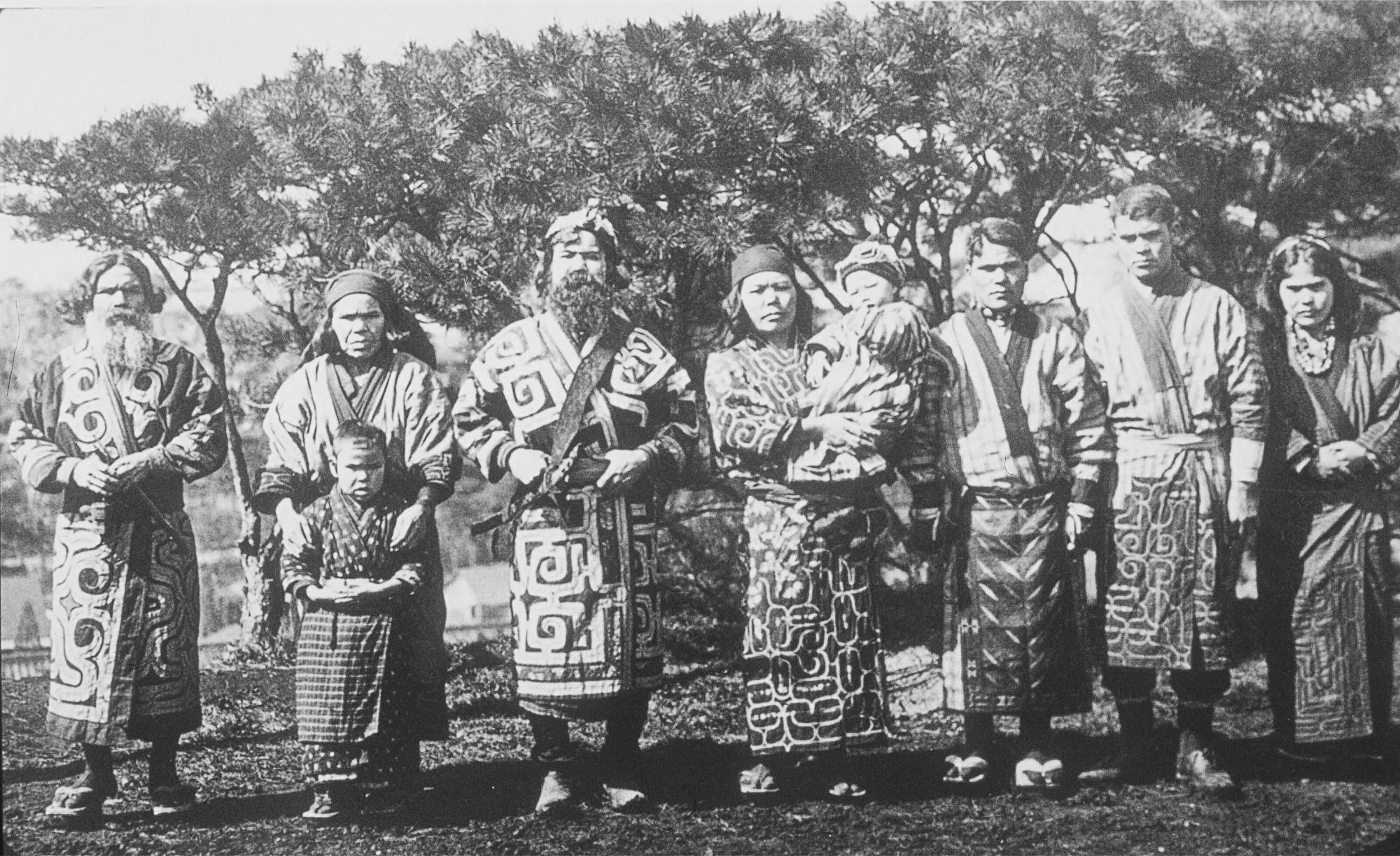
A world full of kamuy
To the Ainu, the world is shared with kamuy — spirits who take the form of bear, owl, orca, fire, water and even the tools of the house. A kamuy visits the human world clothed in an animal's body; to hunt is to receive a gift, and the spirit is thanked and sent home with ceremony so that it will return. Carved prayer-sticks, the ikupasuy, lift human words to the spirits, and inau — willow wands shaved into fine curls — stand as offerings. Nothing is taken without respect, and respect is owed to the smallest things.
%2C_katsura_tree_I.JPG)
Suppression, and a hard-won revival
From the 19th century the Meiji state annexed Hokkaidō, banned core Ainu practices, seized land and pressed assimilation through a law that named the Ainu 'former aborigines'. The language slid toward silence and the culture was pushed to the margins. Yet it endured. Activists like Shigeru Kayano fought to record and teach the language; in 1997 the old assimilation law was repealed, and in 2019 Japan at last recognised the Ainu as an Indigenous people. The Upopoy National Ainu Museum opened in 2020, and a new generation sings, weaves and speaks in the present tense.

What is kept alive


.jpg)
A long thread
Hear it for yourself
Threads across the graph
Inuit
Northern hunters whose oral epics and animist respect for the souls of animals mirror the Ainu world of kamuy.
Sámi
An Indigenous people of the far north whose language and song were suppressed and are now, like Ainu itak, being revived.
Diné (Navajo)
A people whose ceremony and design restore balance with a living, spirited world, much as Ainu rites honour the kamuy.
Common questions
Who are the Ainu?
The Ainu are the Indigenous people of the northern islands of Japan — chiefly Hokkaidō, with historic homelands in Sakhalin and the Kuril Islands, a region they call Ainu Mosir, 'the quiet land of human beings'. Traditionally fishers, hunters and gatherers, they have a distinct language, religion and art, and were legally recognised by Japan as an Indigenous people in 2019.
What is the Ainu language, and is it endangered?
Ainu (Ainu itak) is a language isolate — it is related to no other language on Earth, including Japanese. It is critically endangered, with only a small number of fluent first-language elders remaining, though language nests, classes and cultural centres are working hard to revive it. It is written today in an extended Japanese katakana and in the Latin alphabet.
What are upopo, yukar and the mukkuri?
Upopo are seated round-songs, sung in overlapping canon, often while beating the rim of a lidded vessel. Yukar are long sung epics, voiced in the first person of a hero or a kamuy and once chanted through whole winter nights. The mukkuri is a bamboo mouth-harp plucked by a pull-string, its reed shaped by the breath and the mouth to imitate wind, water and the forest.
What does kamuy mean, and what is iyomante?
Kamuy are the spirits that, to the Ainu, dwell in all things — bear, owl, orca, fire, water, even household tools. A kamuy is thought to visit the human world clothed in an animal's body, bringing gifts, and is thanked and ceremonially sent home so that it will return. Iyomante was the most solemn of these rites, the ceremonial sending-back of a bear's spirit; out of respect for Ainu custom its deepest details are kept with the communities who hold them.
How can I help preserve Ainu heritage?
Support Ainu-led cultural organisations and the Upopoy National Ainu Museum in Hokkaidō; learn and share accurate history; buy attus weaving and woodcarving directly from Ainu makers; and back language-revival programmes. On FirstCiv, recordings are made only with the consent of Ainu keepers, ownership stays with the community of origin, and royalties flow back to them — so that the culture sustains the people who keep it alive.
The recordings on this page are openly-licensed reference material, credited to their sources. The Ainu are named as origin; if this heritage is yours, you can claim this page, correct it, or ask for anything to be removed. Photographs & media: Wikimedia Commons (public domain / CC0 / CC BY / CC BY-SA).