
The realm of the four quarters
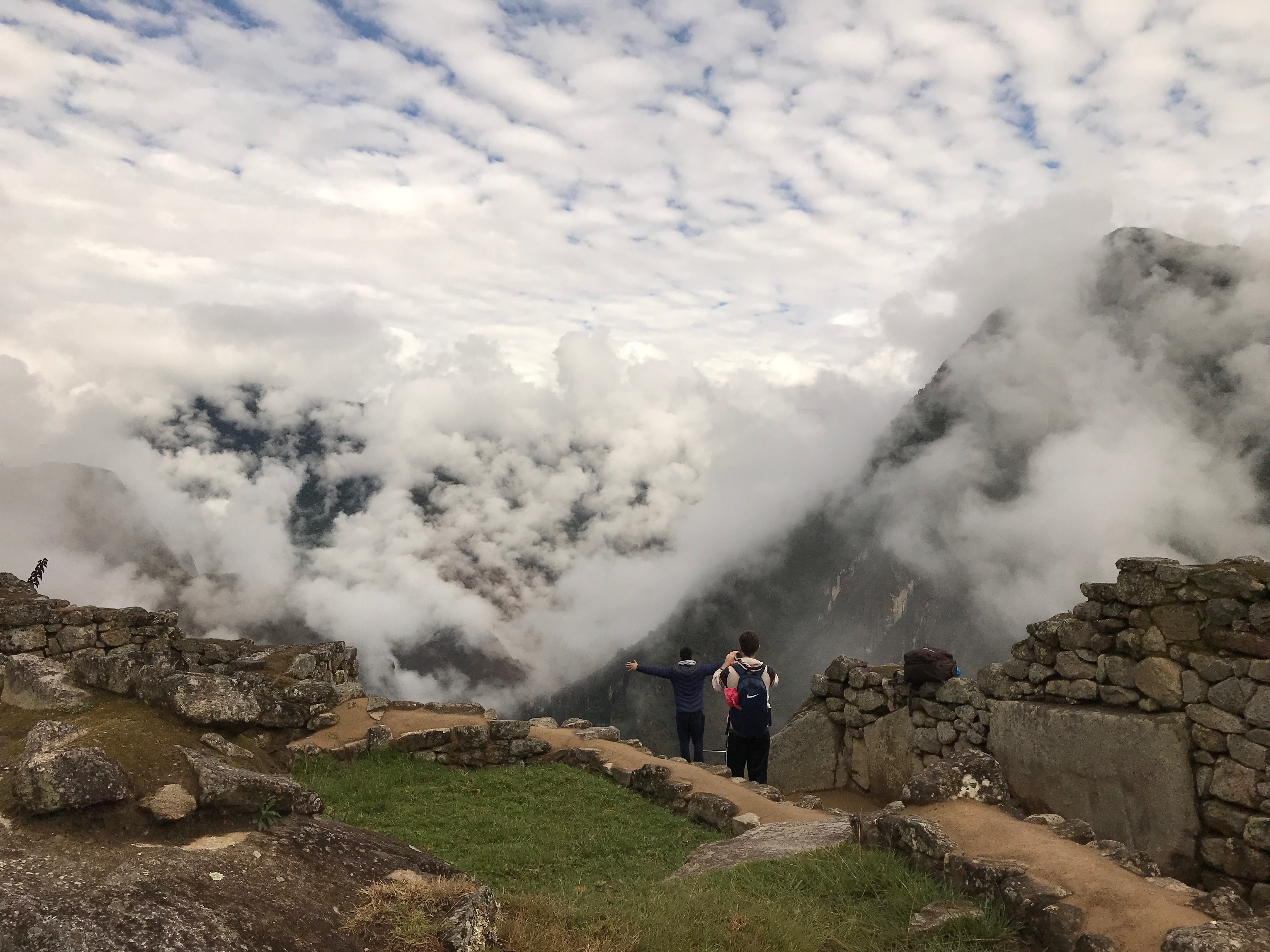
Long before the Inca, Andean peoples were already master farmers and weavers — Caral, Chavín, Wari and Tiwanaku rose and fell across thousands of years. From the 1400s the Inca, speaking Runa Simi, bound much of this world into Tawantinsuyu, 'the four quarters together' — a state of terraced fields, stone roads and knotted-cord records that ran from Colombia to Chile without the wheel, iron or writing as Europe knew it. When the Spanish toppled the Inca rulers in 1533, the people and their language did not vanish; they endured.
A cloth that can be read
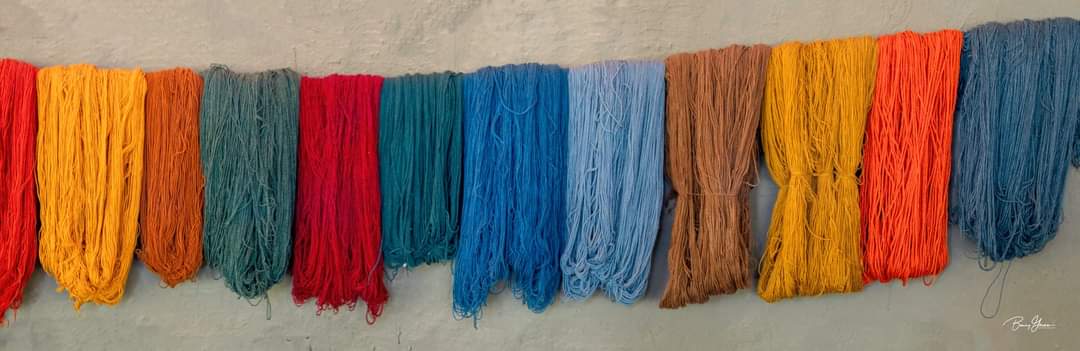
In the Andes, weaving is not decoration but a language. On a backstrap loom tensioned from her own body, a weaver builds up pallay — raised pattern bands — that encode rivers, lakes, herds, the stepped chakana cross and the layout of her own community's land. Colour comes from the mountain itself: cochineal insects for red, plants and minerals for the rest. A skilled weaver can read another village's cloth the way you read this sentence.

A living culture, now
Quechua is an official language in Peru, Bolivia and Ecuador, taught in schools and sung in pop and rap as well as in ancient huayno. Weaving cooperatives have revived natural dyes and old motifs that were nearly lost. Yet migration to the cities, the pull of Spanish, and a warming climate that unsettles the high terraces all press on the herding-and-weaving life — making each recorded song and pattern a thread held against forgetting.

What is kept alive


A long thread
Hear it for yourself
Threads across the graph
Aboriginal Australians
Another people who map and remember their whole country in song and pattern rather than writing.
Diné (Navajo)
Master weavers whose textiles, like Andean cloth, carry cosmology and balance in their design.
Tuvan
Highland herders whose music, like the siku, is bound to wind, animal and mountain.
Common questions
Who are the Quechua?
The Quechua are Indigenous peoples of the Andes — chiefly in Peru, Bolivia and Ecuador — and heirs of Andean civilisations including the Inca. They are the largest Indigenous group in the Americas.
What language do they speak?
They speak Runa Simi (Quechua), a family of related languages once the lingua franca of the Inca empire and still spoken by millions, though under pressure from Spanish.
What is Andean weaving?
Andean textiles are among the world's finest — woven on backstrap looms, their patterns encode community, place and meaning, so that a cloth can be read like a book.
What is huayno?
Huayno is a vibrant Andean musical and dance genre combining pre-Columbian and Spanish elements, played on instruments such as the charango, quena and pan-pipes.
How can I support Quechua heritage?
Support Quechua-led weaving cooperatives and language initiatives, credit makers fairly, and ensure value returns to communities — the principle behind FirstCiv's Heritage Tablets.
The recordings on this page are openly-licensed reference material, credited to their sources. The Quechua are named as origin; if this heritage is yours, you can claim this page, correct it, or ask for anything to be removed. Photographs & media: Wikimedia Commons (CC0 / CC BY / CC BY-SA).