
An island of Hindus in a Muslim sea
As Islam spread across the Indonesian archipelago from the 1400s, the Hindu-Buddhist courts of Java fell one by one — and their priests, artists and aristocrats withdrew across the strait to Bali, carrying their gods, their letters and their dances with them. There, sealed by sea and mountain, the old Majapahit world did not die but deepened, blending with the island's own spirits and ancestor-worship into Agama Hindu Dharma. Today Bali remains a Hindu island in the world's largest Muslim nation — a place where the medieval Javanese cosmos is still danced, sung and offered every single day.
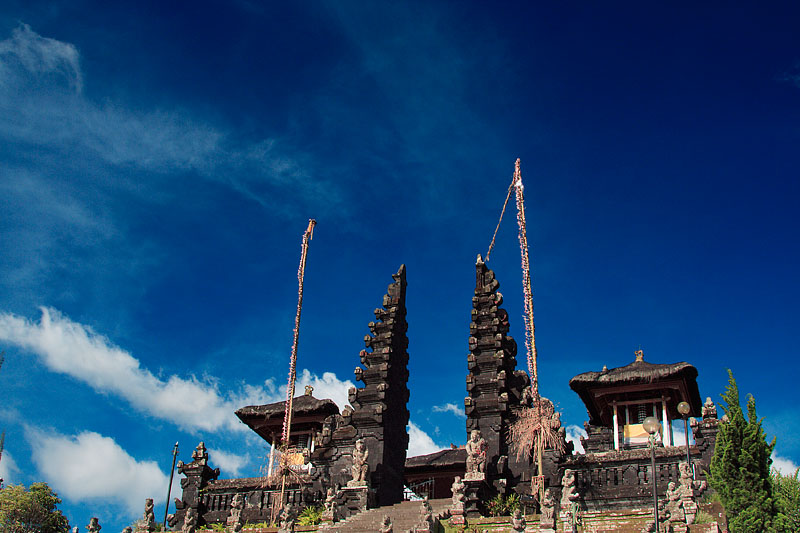
Tri Hita Karana — the three harmonies
Balinese life is ordered by Tri Hita Karana, the principle that well-being flows from three balances: harmony with the gods, with other people, and with the natural world. It shows in the layout of every compound and temple, in the cooperative banjar that runs village affairs, and above all in the subak — the thousand-year-old democratic system of water-temples and shared irrigation that lets the terraced rice ripple down the volcanic slopes, recognised by UNESCO as a living landscape of this very philosophy.

A culture that gives itself away each dawn
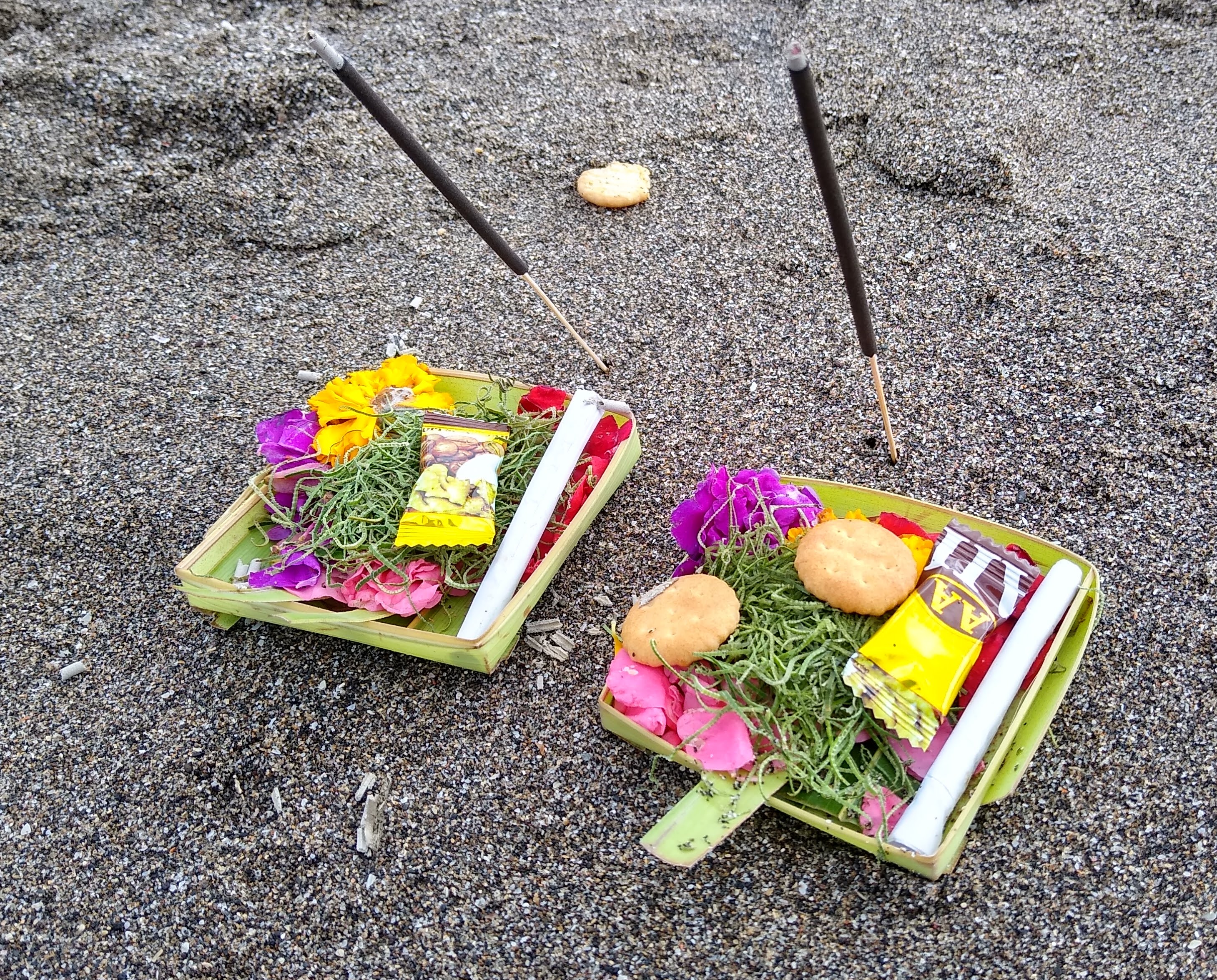
Few cultures spend so much of themselves on the unseen. Each morning the canang sari is set down on shrine and pavement; each temple keeps its odalan; the dead are sent on in towering, joyous cremations. The tourism that arrived in the twentieth century — and now floods the south — both threatens this round of ritual and helps fund it, as the carving, weaving, gamelan and dance once made only for the gods find a second life on the world's stages. The challenge the Balinese name themselves is to keep the offering whole as the island fills.

What is kept alive



A long thread
Hear it for yourself
Threads across the graph
Māori
Fellow Austronesian voyagers, whose carved meeting-house, like the Balinese temple, holds genealogy and the gods in worked wood.
Tibetan
Another living Asian world where art, dance and the written letter are themselves acts of devotion.
Hmong
Highland neighbours of the wider region whose craft and ritual likewise carry cosmology and ancestry in their patterns.
Common questions
Who are the Balinese?
The Balinese are the people of Bali, a Hindu island in the Muslim-majority nation of Indonesia. They descend from Austronesian settlers and from Javanese Hindu courts that withdrew to Bali as Islam spread, and their culture is woven around the Agama Hindu Dharma faith.
What is the kecak dance?
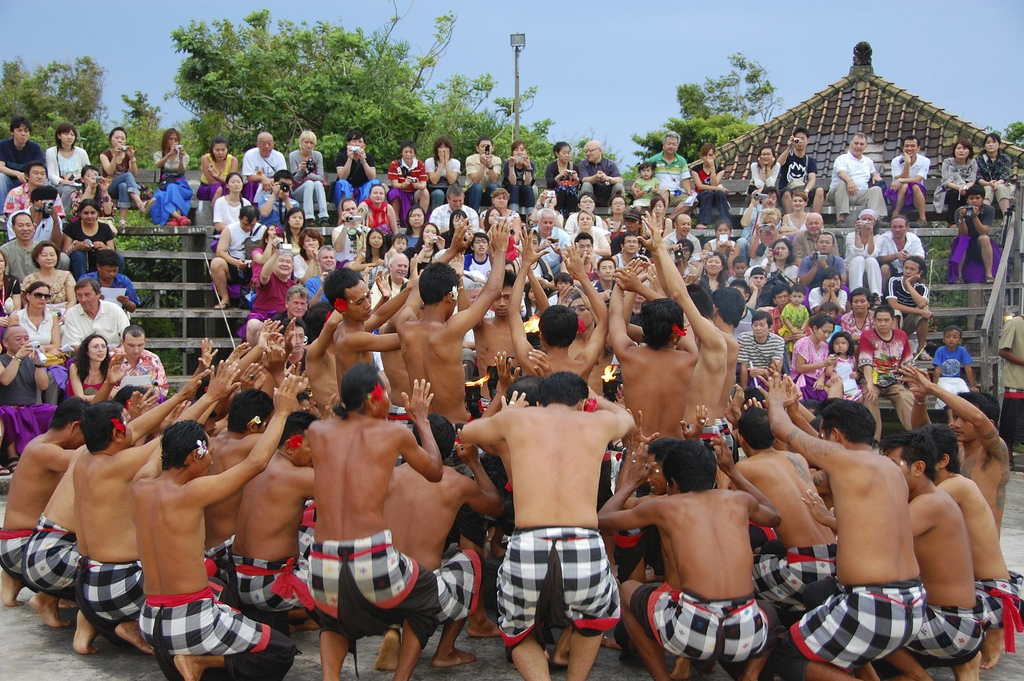
Kecak is a Balinese performance in which a large ring of men chant an interlocking 'cak-cak-cak' rhythm — a 'vocal gamelan' — while episodes of the Ramayana are acted out among them, usually at dusk and often by firelight.
What is gamelan?
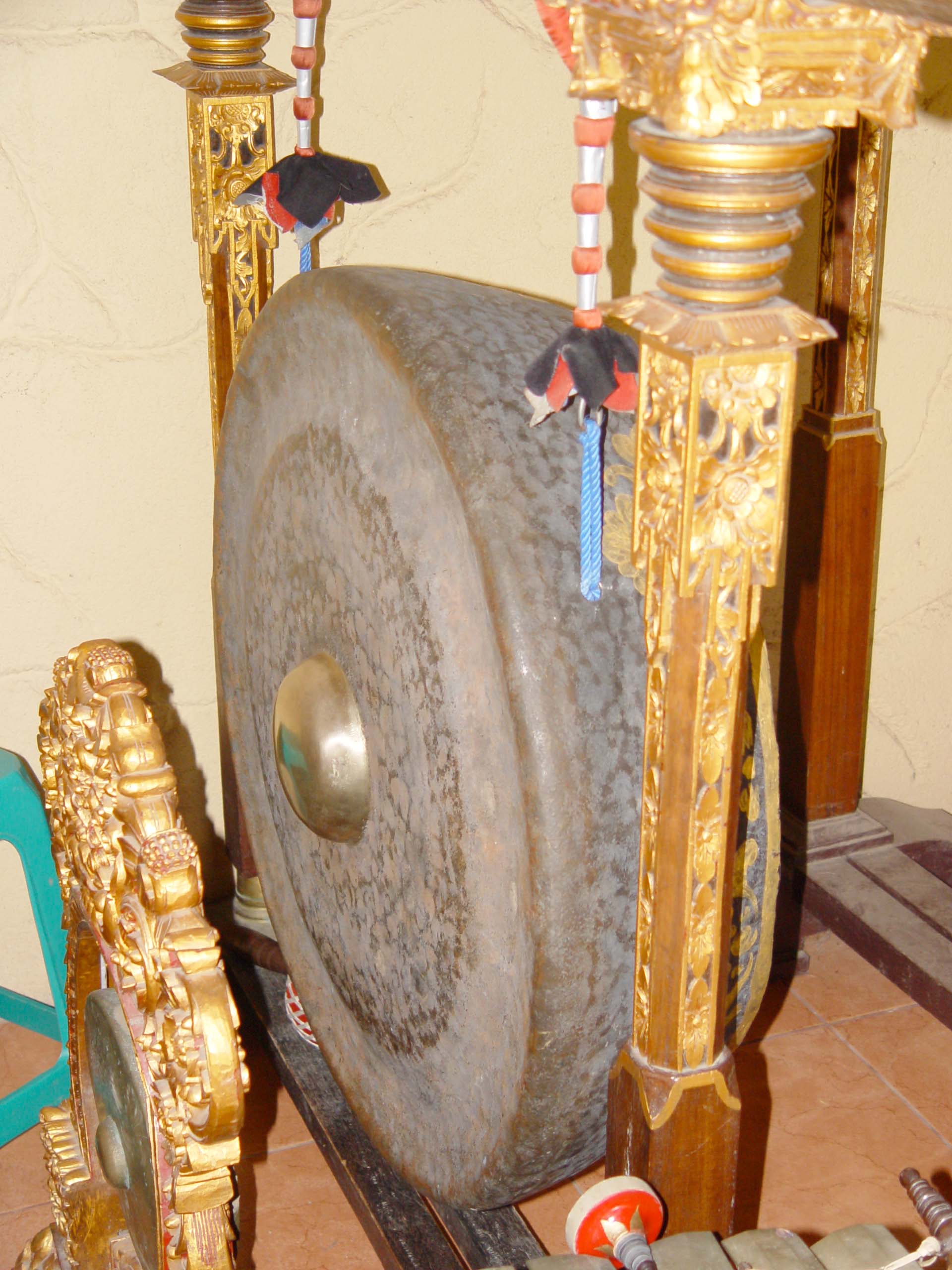
Gamelan is the percussion orchestra of bronze metallophones, gongs and drums at the heart of Balinese music. Its instruments are tuned in slightly mistuned pairs so the bronze shimmers, and the bright, explosive gong kebyar style is the island's signature.
What language do the Balinese speak?
They speak Basa Bali (Balinese), an Austronesian language with distinct high and low registers used according to whom one addresses. It is written in Aksara Bali, a Brahmi-descended script, though Indonesian and Latin script are now widely used too.
How can I experience Balinese culture respectfully?
Engage with banjar and temple communities directly, dress and behave modestly at temples, never disturb offerings or ceremonies, and ensure recordings are made with consent and benefit the community — the principle behind FirstCiv's community-owned Heritage Tablets.
The recordings on this page are openly-licensed reference material, credited to their sources. The Balinese are named as origin; if this heritage is yours, you can claim this page, correct it, or ask for anything to be removed. Photographs: Wikimedia Commons (public domain / CC0 / CC BY / CC BY-SA).